Stop Water from Pooling and Eroding Your Land
Drainage Solutions in Round Top, Texas
When water pools in your yard, driveway, or pasture after a heavy rain, it signals a drainage problem that will worsen over time. In Round Top, where clay soils and low-lying areas are common, standing water can soften driveways, damage foundations, and create erosion channels that cut through your property and make future grading or construction more difficult.
Round Top Properties and Land Management designs drainage improvements based on local soil types, rainfall patterns, and how water moves across your land. Common solutions include grading adjustments that redirect runoff and drainage channels that carry water away from vulnerable areas, and the crew is familiar with the terrain and drainage challenges specific to properties in Round Top and the surrounding areas.
Get a drainage assessment for your property to identify problem areas and discuss options.
How Drainage Work Protects Your Property
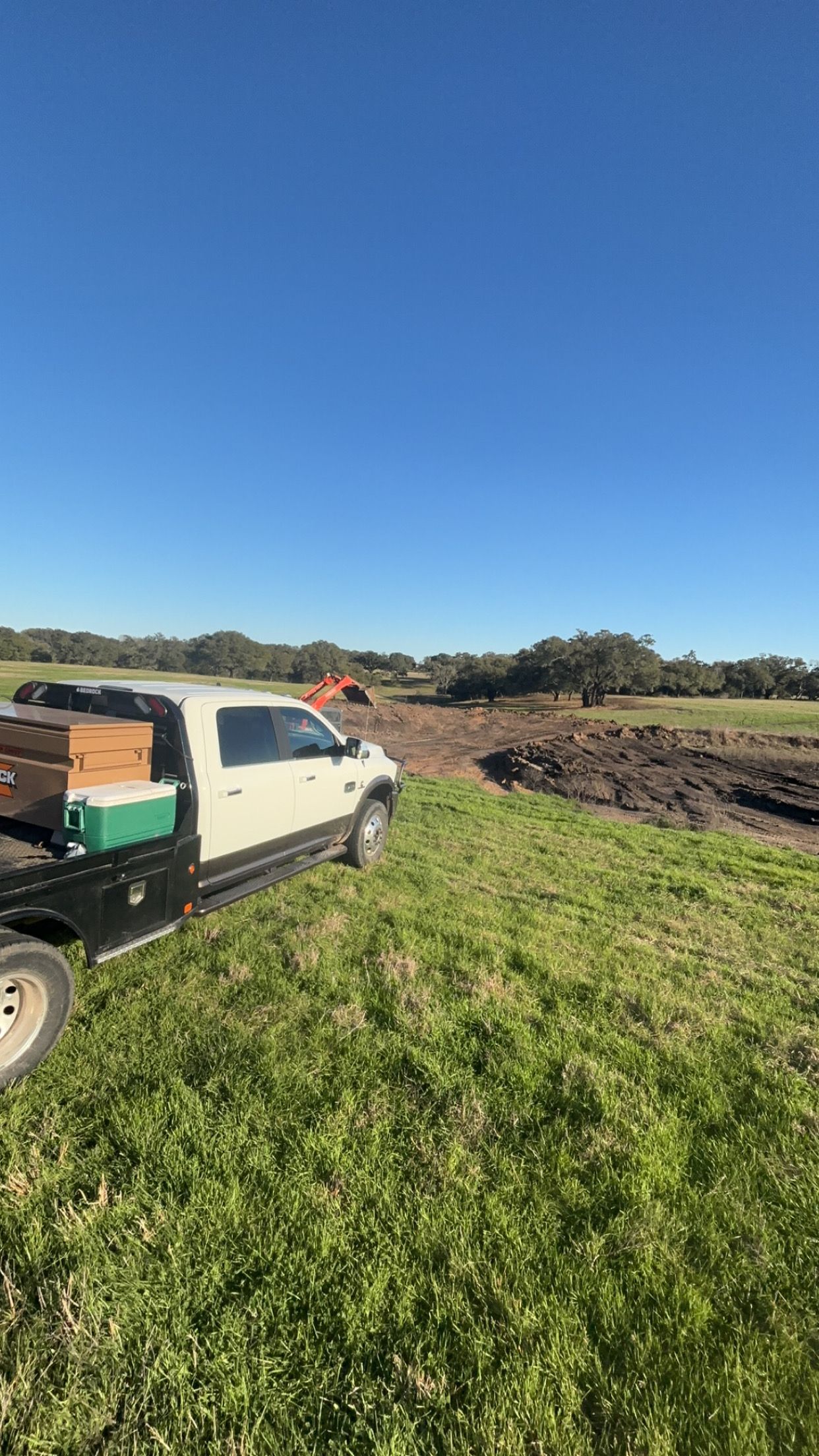
The crew begins by walking your property in Round Top to observe how water flows during and after rain, where it collects, and what features are at risk. Grading equipment is used to reshape low spots, create gentle slopes, and direct water toward drainage channels or natural outlets that carry it away from structures, driveways, and cleared pads.
After the work is finished, you will see that water moves off your property instead of pooling, and areas that used to stay wet will dry out faster. Driveways and building pads stay stable, and erosion slows or stops in areas where channels were installed.
Drainage work often pairs with site prep or land clearing when you are preparing property for construction or long-term use. The service does not include underground piping or complex stormwater systems unless specifically discussed, but it does address the most common drainage issues found on rural acreage.
Most people ask how drainage improvements are designed, how long the work takes, and whether grading will disrupt existing landscaping or features.
What Property Owners Usually Want to Know
Round Top Properties and Land Management works with property owners throughout the Round Top service area who need drainage improvements to protect driveways, pads, and cleared land. Learn more about how grading and drainage design can address your property's water issues.